
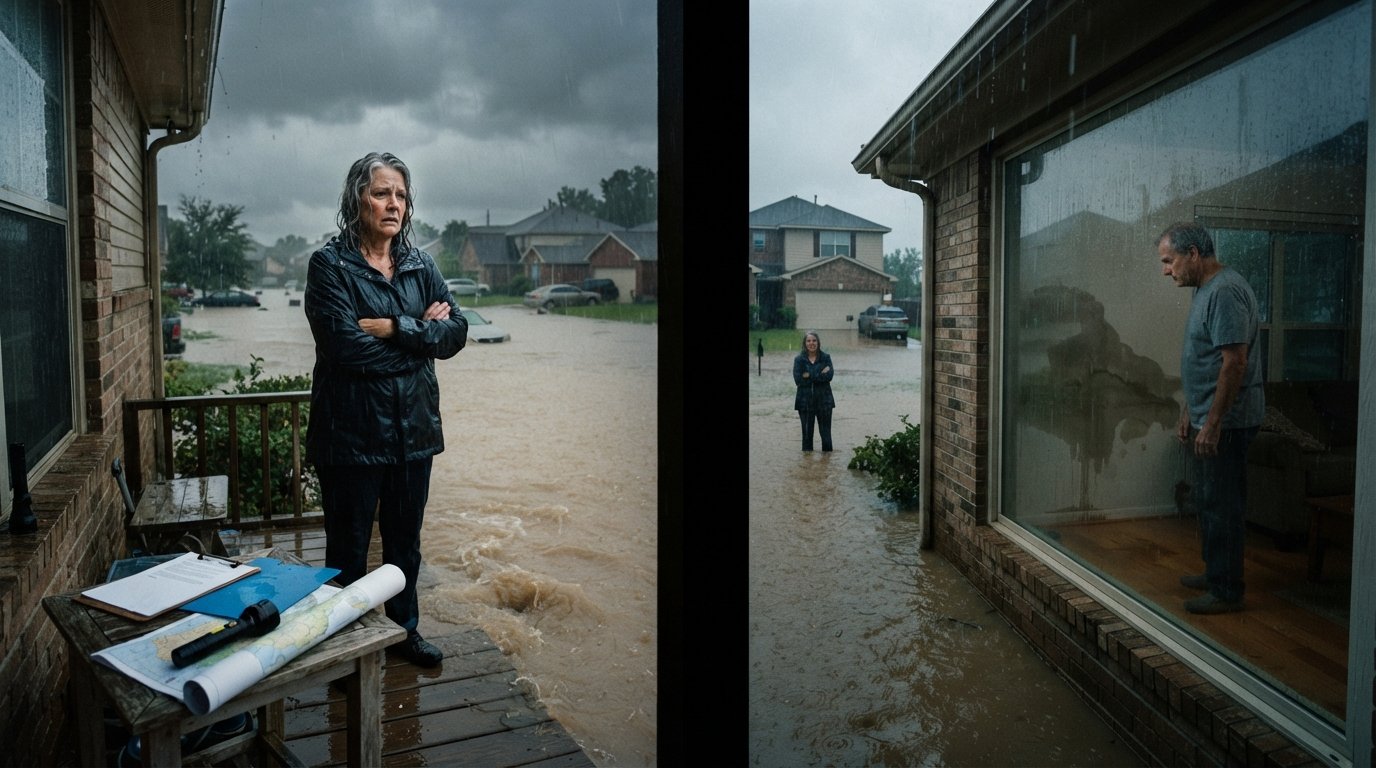
Flood Insurance vs Homeowners Insurance Coverage
Flood insurance vs homeowners insurance coverage explained: why flood damage is excluded and how to add protection. Call (833)-214-6397 for guidance.

By Julia Hayes
When a storm rolls in, the last thing you want to discover is that your homeowners policy will not pay for the water rising through your door. Yet that is exactly the situation many U.S. homeowners face, because flood damage is typically excluded from standard homeowners insurance. Understanding the difference between flood insurance and homeowners insurance coverage is not just an academic exercise: it is the difference between a manageable recovery and a financial catastrophe. This guide breaks down why the exclusion exists, what each policy actually covers, how to evaluate your risk, and the concrete steps to add flood protection alongside your existing home policy.
Why Standard Homeowners Insurance Excludes Flooding
Homeowners insurance is designed to protect against sudden, accidental damage from perils such as fire, wind, hail, lightning, and vandalism. Flood is treated differently because it is a widespread, catastrophic event that affects many properties at once. If private insurers covered flood under standard home policies, a single major storm could generate claims across an entire region, threatening the solvency of insurers and making premiums unaffordable for everyone. For that reason, the industry has long separated flood risk from the standard homeowners form, and most policies explicitly exclude water damage caused by flooding, surface water, storm surge, and overflow of bodies of water.
This exclusion often surprises homeowners because wind-driven rain and wind damage are usually covered, while water that enters from the ground up is not. The distinction matters after a hurricane or heavy rainfall: if your roof is damaged by wind and rain enters through the opening, that may be covered; if water rises from the street and enters through the foundation, that is typically a flood loss and is excluded. Understanding this boundary is the first step in closing the gap in your protection.
What Flood Insurance Covers and How Policies Are Structured
Flood insurance is a separate policy that pays for direct physical damage from flooding, which is generally defined as a general and temporary condition of partial or complete inundation of normally dry land. A flood policy typically covers the building structure and, optionally, the contents inside. Building coverage can include the foundation, walls, electrical and plumbing systems, HVAC equipment, and built-in appliances. Contents coverage can include furniture, clothing, electronics, and other personal property, though basements and below-ground levels usually have limited coverage.
Flood policies are structured differently from homeowners policies. They often have separate deductibles for building and contents, and coverage limits are capped, especially under the National Flood Insurance Program. Claims are adjusted based on the replacement cost or actual cash value of the damaged property, depending on the policy and the type of property. There are also important exclusions, such as damage caused by mold that could have been avoided, or losses from sewer backup unless specifically endorsed. Homeowners should read the policy forms carefully and ask an agent to explain how a claim would be paid.
A useful way to think about the two products is that homeowners insurance protects your home from many everyday perils, while flood insurance protects your home and belongings from one specific but devastating peril. Neither policy replaces the other, and most households need both to be fully protected.
NFIP vs Private Flood Insurance Options
For decades, the primary source of flood coverage in the United States has been the National Flood Insurance Program, which is administered by FEMA. NFIP policies are available in participating communities and offer standardized coverage limits: typically up to $250,000 for the building and $100,000 for contents for residential properties. The NFIP can be a reliable option, but it has limitations, including slower claims processing in some cases and coverage caps that may not reflect the full value of a modern home.
Private flood insurance has grown in recent years as an alternative. Private carriers may offer higher coverage limits, broader terms, or more flexible pricing, and they can sometimes cover risks that the NFIP does not. However, private policies vary widely, so consumers need to compare the fine print, including exclusions, waiting periods, and claims handling. A licensed agent can help you compare options, and platforms such as InsuranceShopping provide educational resources and comparison tools to help you understand what is available in your area.
When evaluating NFIP versus private flood insurance, consider the following factors:
- Coverage limits: Does the policy provide enough building and contents coverage for your home and belongings?
- Pricing: What is the annual premium, and how does it compare for similar coverage?
- Claims reputation: How quickly and fairly does the insurer handle flood claims?
- Exclusions and deductibles: Are there important gaps, such as basement contents or detached structures?
- Waiting periods: How long after purchase does coverage take effect? (NFIP typically has a 30-day waiting period.)
In many cases, the best approach is to obtain quotes from both the NFIP and one or more private insurers, then compare the total cost of coverage against the protection provided. Because flood risk varies dramatically by location, a policy that works well for one home may be a poor fit for another.
How to Assess Your Flood Risk and Coverage Needs
Flood risk is not limited to homes near rivers or coastlines. Heavy rainfall, flash flooding, and stormwater runoff can affect properties far from obvious water sources, and FEMA reports that many flood claims come from areas outside high-risk zones. To assess your risk, start by checking the flood zone designation for your property through FEMA flood maps and local planning resources. Then consider historical flooding in your area, the elevation of your home, and whether your community participates in the NFIP.
Next, estimate the cost to repair or rebuild your home and replace your belongings. A flood policy limit should be high enough to cover major structural repairs, mechanical systems, and essential contents. Many homeowners underestimate the cost of rebuilding after a flood, especially when labor and materials are in high demand after a disaster. Reviewing your homeowners coverage alongside a flood quote can reveal gaps that need to be addressed.
It also helps to understand what drives your overall insurance costs. In our guide on what drives home insurance premiums, we explain how location, construction, and claims history influence pricing, and those same factors often affect flood insurance rates. For example, a home in a high-risk flood zone may face significantly higher flood premiums, while elevating utilities or adding flood vents can sometimes reduce the cost.
Finally, consider how a flood would affect your finances. If you could not absorb a $50,000 repair bill without severe hardship, flood insurance is likely worth the premium even in moderate-risk areas. The goal is not to eliminate all risk but to transfer the catastrophic portion to an insurer so that a single event does not wipe out your savings.
Steps to Add Flood Coverage Alongside Your Homeowners Policy
Adding flood coverage is a straightforward process, but it requires planning, especially because most flood policies have a waiting period before coverage takes effect. The following steps can help you integrate flood protection with your existing homeowners insurance coverage:
- Review your homeowners policy: Confirm what water damage is covered and identify the flood exclusion. Ask your agent to explain any endorsements that might provide limited water backup coverage.
- Determine your flood risk and coverage needs: Use flood maps, local history, and a replacement cost estimate to decide how much building and contents coverage you need.
- Get quotes from multiple sources: Compare NFIP and private flood insurance options, and ask about deductibles, limits, and exclusions. Use comparison tools to streamline the process.
- Choose a policy and complete the application: Select the coverage that best fits your budget and risk, and submit the application well before storm season to account for waiting periods.
- Coordinate with your homeowners insurer: Keep both policies in force and review them annually to ensure limits keep pace with rebuilding costs and your belongings.
After you purchase flood coverage, store your policy documents with your homeowners policy and create a home inventory with photos or video. That documentation can speed up claims and help you maximize your recovery. It is also wise to review your coverage after major renovations or purchases, since your flood policy limits may need to be increased.
Common Misconceptions About Flood and Homeowners Coverage
One common misconception is that homeowners insurance covers flooding if the water enters through a broken window or roof. In reality, the source of the water matters: rain entering through a wind-damaged opening may be covered, but rising water from outside is generally excluded. Another misconception is that federal disaster assistance is a substitute for flood insurance. Disaster aid is often limited and may come in the form of loans that must be repaid, whereas flood insurance is a contractual obligation to pay covered claims.
Some homeowners also assume that flood insurance is only for high-risk zones. In fact, flooding can happen anywhere, and many policies are available in moderate- and low-risk areas at lower premiums. Finally, some believe that flood insurance covers everything in a basement. Most policies provide limited coverage for basement contents and finished spaces, so it is important to read the fine print and ask about specific exclusions.
By understanding these misconceptions, homeowners can make more informed decisions and avoid unpleasant surprises after a storm. The key is to treat flood insurance as a distinct product with its own rules, limits, and exclusions, rather than assuming it is included in a standard homeowners policy.
Frequently Asked Questions
Does homeowners insurance ever cover flood damage?
Standard homeowners policies typically exclude flood damage, but some limited coverage may apply for water backup or accidental discharge from plumbing. For rising water from outside, a separate flood policy is usually required.
How long does it take for flood insurance to take effect?
NFIP policies generally have a 30-day waiting period before coverage begins, while private policies may have shorter or longer waiting periods. Plan ahead so coverage is in place before a storm threatens.
Can I buy flood insurance if I live in a low-risk area?
Yes. Flood insurance is available in participating communities regardless of flood zone, and premiums are often lower in low-risk areas. Many homeowners in moderate-risk zones are surprised to learn how affordable coverage can be.
Does flood insurance cover temporary living expenses?
Some flood policies include limited coverage for temporary living expenses if your home is uninhabitable due to a covered flood loss. Check the policy details, as this coverage is not always included.
Will flood insurance cover my basement?
Coverage for basements is limited. Building coverage may include essential equipment such as furnaces and water heaters, but finished walls, floors, and contents are often excluded or capped. Review the policy carefully.
Protecting your home from flooding starts with a clear understanding of what each policy does and does not cover. By comparing homeowners insurance and flood insurance side by side, assessing your risk honestly, and adding coverage before disaster strikes, you can close the gap and give yourself peace of mind. Take the time to review your options today, and consider speaking with a licensed agent or using a trusted comparison resource to find the right combination of coverage for your home and budget.