
Climate Risk and Home Insurance Availability by Region
Climate risk and home insurance availability by region keeps shifting. Compare coverage options and stay insurable at (833)-214-6397.

By Isaac Ellis
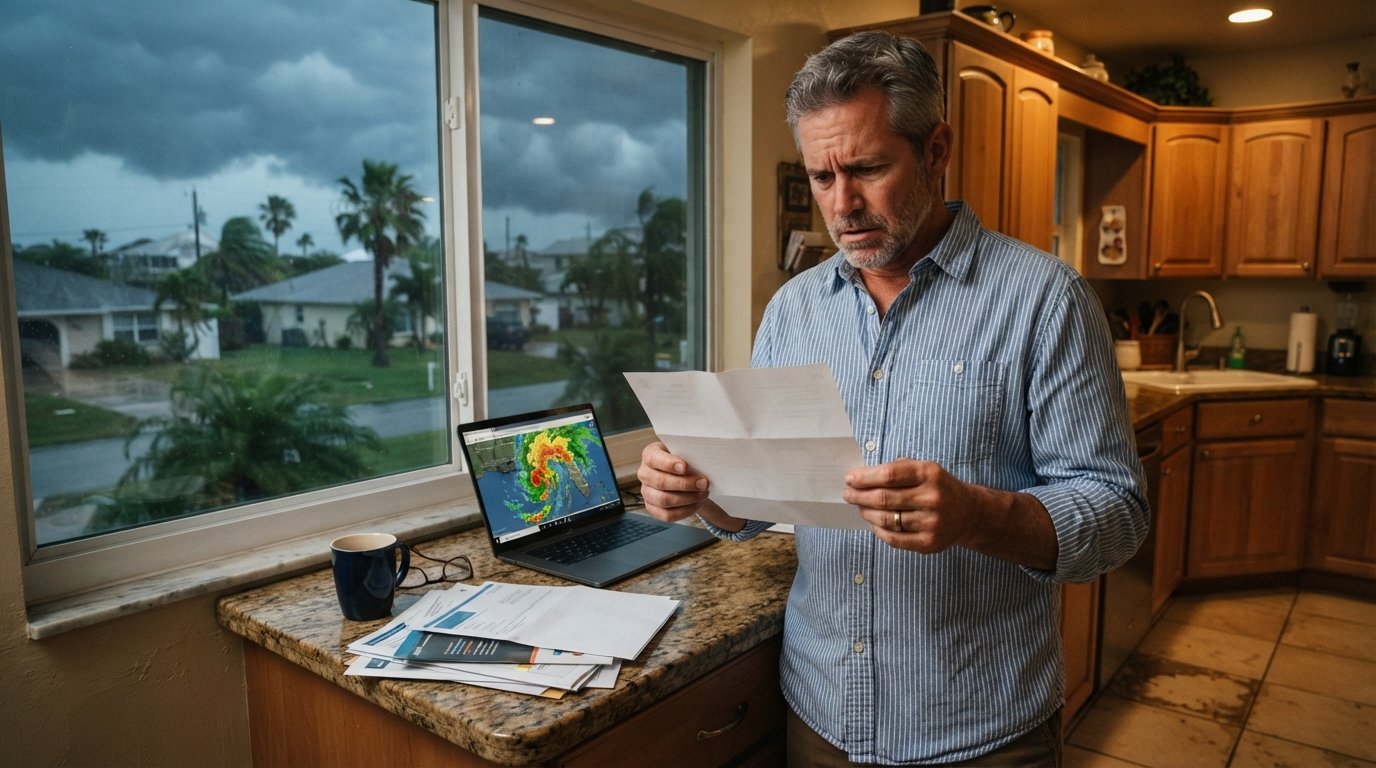
A homeowner in a coastal Florida county opens a renewal notice and finds a 40 percent rate increase, or worse, a non-renewal letter. A family in a wildfire-prone California canyon gets told by three carriers in a row that they are not writing new policies there. A retiree in a flood zone discovers that their standard policy never covered flooding in the first place. These are not isolated stories. They are the visible edge of a structural shift in how climate risk and home insurance availability by region interact across the United States, and the shift is accelerating.
For consumers, the practical question is no longer whether climate change affects insurance. It already does. The real question is which regions are tightening, which carriers are pulling back, and what a homeowner can do to stay insurable at a price that does not wreck the household budget. This guide breaks down the mechanics of underwriting, the state-by-state picture, and the concrete steps that keep coverage within reach.
How Climate Risk Enters the Underwriting Equation
Insurers do not price risk emotionally, they price it actuarially. When a carrier evaluates a home, it runs the address through catastrophe models that estimate the probability and severity of future losses from wildfire, hurricane, convective storm, hail, and flood. Those models are updated constantly with new climate data, and when the outputs change, underwriting guidelines change with them. A property that was comfortably insurable five years ago can become marginal or declined today without any change to the house itself.
The mechanics work through three channels. First, reinsurance: the global companies that backstop insurers have raised prices and tightened terms in catastrophe-exposed regions, and those costs flow down to primary carriers and then to homeowners. Second, loss history: in states hit by repeated billion-dollar events, carriers reassess whether their concentration of policies in one geography is too dangerous for their balance sheet. Third, regulatory constraints: insurers must get rate filings approved, and when approved rates lag behind modeled risk, carriers sometimes choose to shrink their footprint rather than write policies at a loss.
The result is a market that looks very different depending on where you live. The same house, same construction, same credit score, can be routinely insured in one state and nearly uninsurable in another. That divergence is the core of climate risk and home insurance availability by region.
Wildfire, Hurricane, and Flood: Three Different Underwriting Reactions
Not all climate perils behave the same way in the insurance market, and homeowners benefit from understanding which risk drives their regional market.
Wildfire risk is hyper-local. Two homes on the same street can have radically different scores based on vegetation, slope, access roads, and distance to fuel. Carriers in California, Colorado, Oregon, and parts of Texas have used wildfire scoring to non-renew thousands of policies in high-hazard zones. Some have stopped writing new business entirely in certain counties. The California FAIR Plan, the state's insurer of last resort, has seen its exposure balloon as private carriers retreat.
Hurricane risk is regional and concentration-driven. Along the Gulf Coast and the Atlantic seaboard, carriers worry less about any single home and more about how many homes they insure in the path of a single storm. Florida has seen multiple national carriers exit or shrink, pushing homeowners toward Citizens Property Insurance Corporation, the state-backed option. Louisiana, Texas, and coastal Carolina markets have seen similar pressure, though the severity varies by county and distance from the coast.
Flood risk operates on a separate track entirely. Standard homeowners policies exclude flooding, which means the private market for flood coverage is thinner and more specialized. FEMA's National Flood Insurance Program remains the dominant provider, but private flood insurers have expanded in recent years, often with tighter underwriting in high-risk zones. Homeowners in Special Flood Hazard Areas frequently face mandatory purchase requirements from their mortgage lender, which adds a second layer of cost on top of the standard policy.
The practical takeaway: a homeowner in a hurricane zone may face availability problems driven by carrier concentration, while a homeowner in a wildfire zone may face availability problems driven by address-level scoring. The solutions overlap but are not identical.
Why Carriers Are Limiting New Policies in High-Risk States
When a major carrier announces it is pausing new business in a state, the headlines often frame it as a political story. Operationally, it is a capital story. Insurers must hold reserves against the policies they write, and regulators and rating agencies scrutinize how concentrated those policies are in catastrophe-prone areas. A carrier with too much exposure to a single hurricane or wildfire scenario can face downgrades, higher reinsurance costs, or difficulty raising capital.
Several forces are converging at once:
- Reinsurance costs have risen sharply in catastrophe-exposed regions, sometimes doubling or tripling for the riskiest layers of coverage.
- Climate models now project higher frequency and severity for many perils, which raises the modeled probable maximum loss for insurers.
- Regulatory approval processes in some states have kept rates below what carriers say they need, creating a mismatch between price and risk.
- Litigation environments in certain states increase the cost of every claim, from roof damage to total loss.
- Population growth in high-risk areas means more insured value is concentrated in the same vulnerable geographies.
When those forces combine, carriers have three options: raise rates, tighten underwriting, or exit. Most do some combination of all three. That is why a homeowner in a high-risk state may see a rate increase at renewal even if they have never filed a claim, and why a buyer trying to close on a home in a wildfire or coastal zone may find that no standard carrier will write a new policy.
For consumers trying to compare options across this shifting landscape, tools that aggregate quotes from multiple carriers become essential. QuoteComparison.com provides educational guides and comparison resources that help homeowners understand what is available in their region before they start calling agents. When the market is tightening, information is leverage.
The Role of State-Backed Insurers of Last Resort
Every state with significant catastrophe exposure has some form of residual market, a public or quasi-public insurer that writes policies when the private market will not. These are often called FAIR Plans, beach plans, or wind pools, and they exist in Florida, California, Louisiana, Texas, and many other states.
These programs serve a critical function: they keep the housing market functioning when private carriers pull back. Without them, homes in high-risk areas could become effectively unsellable because buyers could not obtain insurance, and lenders would not fund mortgages without it. But they are not a free lunch. Coverage is often narrower than a standard policy, limits may be lower, and premiums can be higher than what a private carrier would charge for equivalent risk. They are also funded through assessments on insurers and, in some cases, policyholders, which means the cost is ultimately shared across the state.
Homeowners should understand that an insurer of last resort is a backstop, not a long-term strategy. If a private carrier will write the policy, that is usually the better option for coverage breadth and service. But when the private market is closed, the residual market is what keeps the roof insurable.
Steps Homeowners Can Take to Remain Insurable
Even in tightening markets, homeowners have more control than they often realize. Insurers reward properties that demonstrate reduced risk, and small investments can meaningfully change an underwriting decision.
The most effective steps vary by peril, but a core set of actions helps in almost every high-risk region:
- Request a full replacement cost estimate and review your dwelling limit annually. Underinsurance is a bigger financial risk than most homeowners realize, and carriers increasingly require accurate valuations.
- Document home hardening improvements with photos, receipts, and permits. A new roof, ember-resistant vents, defensible space, or storm shutters can move a property from declined to accepted.
- Shop the market before renewal, not after a non-renewal. Starting the search 60 to 90 days early gives you time to compare quotes and consider the residual market if needed.
- Consider a higher deductible for catastrophe perils. A separate wind or hail deductible can lower premiums and signal to the carrier that you are sharing more of the risk.
- Bundle home and auto coverage where possible. Multi-policy discounts do not eliminate climate risk, but they can offset part of a rate increase and improve retention standing with the carrier.
For homeowners comparing bundling options, resources like the 2026 guide to bundling home and auto insurance discounts explain how multi-policy savings work and when they make sense. The broader principle is that insurers look at the whole relationship, not just the single property, and a long-tenured, multi-policy customer with a well-maintained home is more attractive than a new single-policy risk in a high-hazard zone.
It also helps to work with a resource that explains how carriers evaluate risk and where to find coverage when the standard market tightens. InsuranceAdvisers is a comprehensive online resource for U.S. consumers who want to understand, compare, and shop for insurance policies, including home coverage in challenging markets.
Regional Patterns Worth Watching
While every state has its own regulatory and market dynamics, several regional patterns have become clear.
In the Southeast and Gulf Coast, hurricane and convective storm risk dominate. Florida, Louisiana, and coastal Texas have seen the most dramatic availability shifts, with state-backed options absorbing a growing share of the market. Inland states like Georgia and the Carolinas face a mix of wind and flood risk, with private carriers still active but increasingly selective about coastal counties.
In the West, wildfire is the defining peril. California's market has been the most visible, but Colorado, Oregon, Washington, and parts of Arizona and New Mexico have seen similar tightening. The common thread is that wildfire risk is address-level, so two neighbors can face very different outcomes.
In the Midwest and Plains, hail and tornado risk drive underwriting, and while availability has not collapsed, premiums have risen steadily. Flood risk along the Mississippi and Missouri river basins adds a second layer of complexity for homeowners in those corridors.
In the Northeast, the picture is mixed. Coastal storm risk affects Long Island, New Jersey, and New England, while inland areas remain relatively stable. But as storm tracks shift, carriers are reassessing assumptions that were once considered safe.
The unifying theme is that climate risk and home insurance availability by region are no longer static. A market that is open today may tighten next year, and homeowners who understand the drivers can plan ahead rather than react to a non-renewal letter.
Staying insurable in a changing climate is not about finding a loophole. It is about understanding how risk is priced, keeping the property attractive to carriers, and knowing where to look when the standard market steps back. Homeowners who take those steps early give themselves options, and options are what keep coverage affordable when the market tightens.